One Year of US Tariffs on Malaysia: A Reality Check for Small Business Owners
One year ago today, the US government announced a 24% tariff on Malaysian goods as part of its sweeping "Liberation Day" trade measures. If you run a small business in Malaysia, you remember the whiplash. The headlines were alarming. The WhatsApp groups were buzzing. Everyone was asking the same question: how bad is this actually going to get?
Twelve months on, we have real answers — and they are more nuanced than most predicted.
Key numbers: One year of US tariffs on Malaysia
- Malaysia initially faced a 24% tariff on US-bound goods (April 2025), later negotiated to 19% by October 2025
- FMM survey of 631 businesses: 49% reported no significant impact; 25% experienced margin compression; 21% had reduced US-side orders
- Government relief: RM1.5 billion ($356 million) allocated for SMEs affected by the tariff shock
- ASEAN exports from Malaysia surged 23% year-on-year by late 2025, despite the tariff uncertainty
- RM53 million MDEC AI adoption grant available for automation; 50% tax deduction on certified AI training
What US Tariffs Apply to Malaysia in 2026? Actually Looked Like for Malaysia
On 2 April 2025, President Trump announced reciprocal tariffs targeting countries the US assessed as having unfavourable trade balances. Malaysia was hit with a 24% rate — one of the higher rates in Southeast Asia, behind Vietnam (46%), Cambodia (49%), and Thailand (36%), but significant enough to send shockwaves through the country's export-heavy industries.
The initial 24% covered virtually all US-bound goods, with exemptions carved out for semiconductors and certain electronics. For a country where the US was the second-largest export destination — accounting for over RM80 billion in goods annually — this was serious.
What followed was a blur of policy responses. Prime Minister Anwar Ibrahim unveiled RM1.5 billion in relief measures for affected SMEs, including soft loans through development financial institutions and expanded guarantees under the Business Financing Guarantee Scheme. MATRADE and SME Corp launched dedicated advisory desks. The Ministry of Investment, Trade and Industry fast-tracked negotiations.
By October 2025, Malaysia had struck a deal reducing the tariff from 24% to 19%. Then in February 2026, a US Supreme Court ruling found the underlying legislation used to impose the tariffs exceeded presidential authority — temporarily voiding the measures. Malaysia became the first country to officially cancel its reciprocal tariff agreement. But by March 2026, the US Trade Representative had initiated new Section 301 investigations targeting Malaysian manufacturing sectors.
The status as of today: uncertain. The tariff environment remains unstable, and businesses that treated this as a temporary blip are now recognising it as the new normal.
How Malaysian SMBs Actually Responded
Research published in 2026 identified three dominant response patterns among Malaysian SMEs that survived — and in some cases, thrived — through the tariff shock.
Market Diversification
The most immediate and widespread response was pivoting export efforts away from the US toward other markets. Businesses that diversified into ASEAN, the Middle East, and North Africa recovered faster than those that waited for the tariff situation to resolve.
Malaysia's 18 active free trade agreements became critical tools here. The upgraded ASEAN-China Free Trade Area (ACFTA 3.0) and revised ASEAN Trade in Goods Agreement opened access to China's $14 trillion domestic market, while the ASEAN Digital Economy Framework Agreement created a simplified pathway for digital commerce across the 680-million-person regional bloc.
For SMBs that moved quickly — building local-language storefronts on regional e-commerce platforms, connecting with ASEAN distributors, and running targeted digital campaigns for new geographies — the pivot paid off. ASEAN countries including Malaysia saw US-bound exports surge 23% year-on-year by late 2025, as front-loading before the tariff deadline had accelerated early shipments and forced market-entry decisions that benefited exporters.
The AI e-commerce automation tools now available for Malaysian sellers make this kind of market expansion far faster and cheaper than it was even two years ago. Building a presence on Lazada Indonesia or Shopee Thailand no longer requires a dedicated regional team.
Operational Cost Reduction
The second response was internal: tightening operations to protect margins. With US buyers either reducing orders or demanding lower prices to offset the tariff burden on their side, Malaysian exporters needed to find cost savings that didn't compromise product quality or service levels.
This is where automation — and increasingly, AI agents for small business — became the critical differentiator. A Penang retailer saved RM100,000 through process automation. A PJ accounting firm cut RM10,000 in monthly overhead by automating invoice extraction. These weren't major IT projects — they were targeted implementations of AI tools against specific, repeatable cost centres.
Medium-sized firms adopted technology at a 42% rate during this period; small firms lagged at 33%. That gap in adoption directly correlated with the gap in recovery speed.
Digital Channel Acceleration
The third pattern was accelerating direct-to-customer digital presence. Businesses that had been passive about e-commerce and digital marketing were suddenly motivated to reduce their dependence on a single distribution channel or geography. This meant building better websites, expanding social commerce, and using AI to automate content creation, customer queries, and lead qualification.
The SMBs that had already invested in digital infrastructure — clear websites, automated follow-up, AI-powered customer service — were positioned to capture demand from new markets faster than those building from scratch during the disruption.
The Numbers Don't Lie — But They Do Surprise
When the Federation of Malaysian Manufacturers surveyed 631 businesses from 15 industry sub-sectors, the findings were counterintuitive:
- 49% reported no significant operational effect
- 25% experienced margin compression
- 21% reported reduced orders from US buyers or intermediary customers
Roughly three-quarters of Malaysian SMEs weathered the tariff year without catastrophic damage. But "survived" is not the same as "thrived." The 25% facing margin compression includes thousands of businesses that saw profits erode quietly — a squeeze that doesn't show up in headline trade statistics.
The businesses most affected were concentrated in specific sectors: furniture and medical equipment (both heavily SME-populated), rubber products, and manufacturers with limited ability to pass cost increases to their buyers.
The businesses least affected had two things in common: diversified customer bases before the tariff hit, and digital infrastructure that made pivoting faster.
Why AI Makes the Difference in a Tariff-Volatile World
The tariff experience exposed a structural vulnerability in how many Malaysian SMBs operate: heavy dependence on a narrow set of customers, markets, and channels — combined with high manual overhead that makes fast pivots expensive and slow.
AI agents address all three of these.
Cutting Operational Costs Without Cutting People
The most immediate application for Malaysian SMBs is automating high-volume, repetitive tasks — invoice processing, customer enquiries, order updates, inventory reconciliation — that currently absorb significant staff time. This matters enormously when margins are compressed by external shocks you cannot control.
The RM53 million AI adoption grant from MDEC exists specifically to fund this kind of automation. Combined with the 50% tax deduction available on certified AI and cybersecurity training expenses, the real cost of implementing basic AI automation is substantially lower than most SMB owners assume. For a full breakdown of the funding landscape, see Malaysia SME digitalisation grants in 2026.
Organisations deploying agentic AI are seeing double-digit efficiency gains and decision latency drop from days to seconds — capabilities that were the exclusive domain of large enterprises two years ago.
Finding New Markets Faster
AI-powered market intelligence, multilingual content creation, and automated lead generation compress the time needed to test and enter a new market. A human team building ASEAN market presence from scratch — translated product listings, regional social media, local-language customer support — would take months and significant headcount. AI agents execute much of this at a fraction of the cost.
For SMBs now serious about reducing US market dependence, AI lead generation tools and AI workflow automation for SMBs are not optional extras — they are the operational infrastructure for the pivot.
Building Scenario Intelligence Into Your Business
The deeper lesson of the past year is that geopolitical trade volatility is not a one-time event. Section 301 investigations have already been launched. The political environment in Washington remains unpredictable. Malaysian SMBs that treat their operations as rigid — fixed costs, fixed customers, fixed channels — will continue to be exposed to the next shock.
AI agents help build operational flexibility by generating real-time insights across sales, supply chain, and customer data. When a tariff change or supply chain disruption happens, businesses with AI-driven decision intelligence can model responses in hours, not weeks. For a practical guide to building this capability, how to implement AI automation in your business covers the full step-by-step process without requiring a technical team.
The Government Support You're Probably Not Using
One pattern that consistently emerged in SME recovery research: businesses that engaged with government support systems — MATRADE, SME Corp, MDEC — recovered faster than those that navigated alone. The support available is more extensive than most SMB owners realise:
- MDEC AI Adoption Grant: RM53 million allocated specifically for SME automation, covering AI tools, implementation, and training
- Business Financing Guarantee Scheme: Enhanced guarantees for SMEs disrupted by trade volatility
- Development Financial Institution soft loans: Low-cost financing for qualifying businesses through institutions like CGC and SJPP
- 50% tax deduction on certified AI and cybersecurity training expenses
- MATRADE market access programmes: Export market intelligence, trade fair facilitation, and direct buyer-matching services
- 18 active FTAs: Including ASEAN, the EU, Australia, and CPTPP — each offering preferential access to markets that diversify your revenue away from any single country
Many of these programmes have straightforward application processes but do require someone to navigate them. This is another area where AI automation pays dividends: automated document preparation, deadline tracking, and programme monitoring reduce the overhead of accessing support that already exists.
For a broader picture of what Malaysia's current digital economy investment wave means for your business, see our analysis of Malaysia's RM87.4 billion digital investment boom.
Five Things to Do This Quarter
-
Audit your customer concentration — If more than 40% of your revenue comes from US-market clients, you are overexposed. Map your top 10 customers by geography this week.
-
Identify one ASEAN market to enter — The ASEAN Digital Economy Framework Agreement has lowered the barrier significantly. Pick one adjacent market — Singapore, Indonesia, or Thailand — and test with a minimum viable digital presence before committing resources.
-
Map your top three manual cost centres — Invoice processing, customer enquiries, and order management are the most common targets for early AI automation. Quantify the hours and ringgit spent on each. That becomes your ROI baseline. For a framework, how to calculate AI ROI gives you the exact methodology.
-
Apply for at least one government programme — Most Malaysian SMBs leave digitalisation funding on the table. With MDEC's AI adoption grant and enhanced financing guarantees available, the cost of not applying is real money.
-
Build an AI strategy before buying more tools — The SMBs that struggled most through 2025 were either ignoring AI entirely or buying disconnected tools without a coherent workflow. Why your small business needs an AI strategy before another AI tool explains how to get this right before spending a ringgit.
Frequently Asked Questions: US Tariffs and Malaysian SMBs
What tariff rate is Malaysia currently facing from the US? Malaysia initially faced a 24% tariff when the US announced its "Liberation Day" trade measures in April 2025. Following negotiations, this was reduced to 19% by October 2025. A US Supreme Court ruling in February 2026 temporarily voided the IEEPA tariffs, though new Section 301 investigations were launched in March 2026, keeping the trade environment uncertain as of April 2026.
How did Malaysian SMBs actually fare during the US tariff year? Research on 631 Malaysian businesses found that 49% reported no significant operational impact, 25% experienced margin compression, and 21% had reduced US-side orders. The businesses that fared best had diversified customer bases across multiple markets and had invested in automation to reduce overhead costs before the tariff hit.
What government support is available for Malaysian SMBs affected by US tariffs? The Malaysian government allocated RM1.5 billion ($356 million USD) in relief measures, including soft loans through development financial institutions, enhanced Business Financing Guarantee Scheme allocations, MDEC's RM53 million AI adoption grant, and a 50% tax deduction on certified AI and cybersecurity training expenses. MATRADE also provides export market intelligence and buyer-matching services.
How can AI help Malaysian businesses survive trade volatility? AI agents help Malaysian SMBs in three key ways: cutting operational overhead by automating repetitive tasks such as invoice processing, customer service, and order management; accelerating entry into new markets like ASEAN and MENA with AI-powered multilingual tools and lead generation; and building scenario intelligence that enables faster decision-making when trade conditions change unexpectedly.
Is Malaysia's tariff situation with the US resolved? No. While the IEEPA-based tariffs were voided by a US Supreme Court ruling in February 2026, the US Trade Representative launched new Section 301 investigations against Malaysia's manufacturing sectors in March 2026. The trade relationship remains uncertain and Malaysian SMBs should continue building market diversification and operational resilience rather than waiting for a permanent resolution.
The Bottom Line
One year after the US tariff shock, Malaysian SMBs have demonstrated genuine resilience. Most survived. Many adapted. A smaller but meaningful cohort used the disruption as the forcing function to build leaner, more digital, more diversified businesses — and came out stronger on the other side.
The tariff uncertainty is not over. New US trade investigations are underway. The global trade environment will remain volatile. What the last twelve months proved is that the businesses best positioned for the next shock are those that reduced operational overhead, diversified their markets, and built digital infrastructure that makes pivoting fast.
That is exactly what AI agents are built to accelerate — not because AI is a trend, but because the structural challenges the tariff year exposed are precisely the problems autonomous systems solve.
The businesses that waited for perfect conditions in 2025 are still catching up. If you haven't started building that infrastructure, the window to act before the next disruption is now.
Internal links used:
- AI E-Commerce Automation for Malaysian Sellers: How to Scale on Shopee, Lazada, and TikTok Shop — Market diversification section
- Agentic AI for Small Business: What It Actually Means and How to Use It — Operational cost reduction section
- AI Customer Service Agents for Malaysian SMBs: How to Cut Support Costs by 30% — Digital channel section
- Malaysia SME Digitalisation Grants in 2026: How to Fund Your AI Transformation — AI cost reduction section
- AI Lead Generation for Small Business: How to Build a Pipeline That Fills Itself — New markets section
- AI Workflow Automation for Small Business: n8n vs Make vs Zapier (2026 Guide) — New markets section
- How to Implement AI Automation in Your Business: A Practical Step-by-Step Guide — Scenario intelligence section
- Malaysia's RM87.4 Billion Digital Investment Boom: What It Really Means for Your Small Business — Government support section
- How to Calculate AI ROI: A Framework for Getting Budget Approved — Action plan step 3
- Why Your Small Business Needs an AI Strategy Before Another AI Tool — Action plan step 5
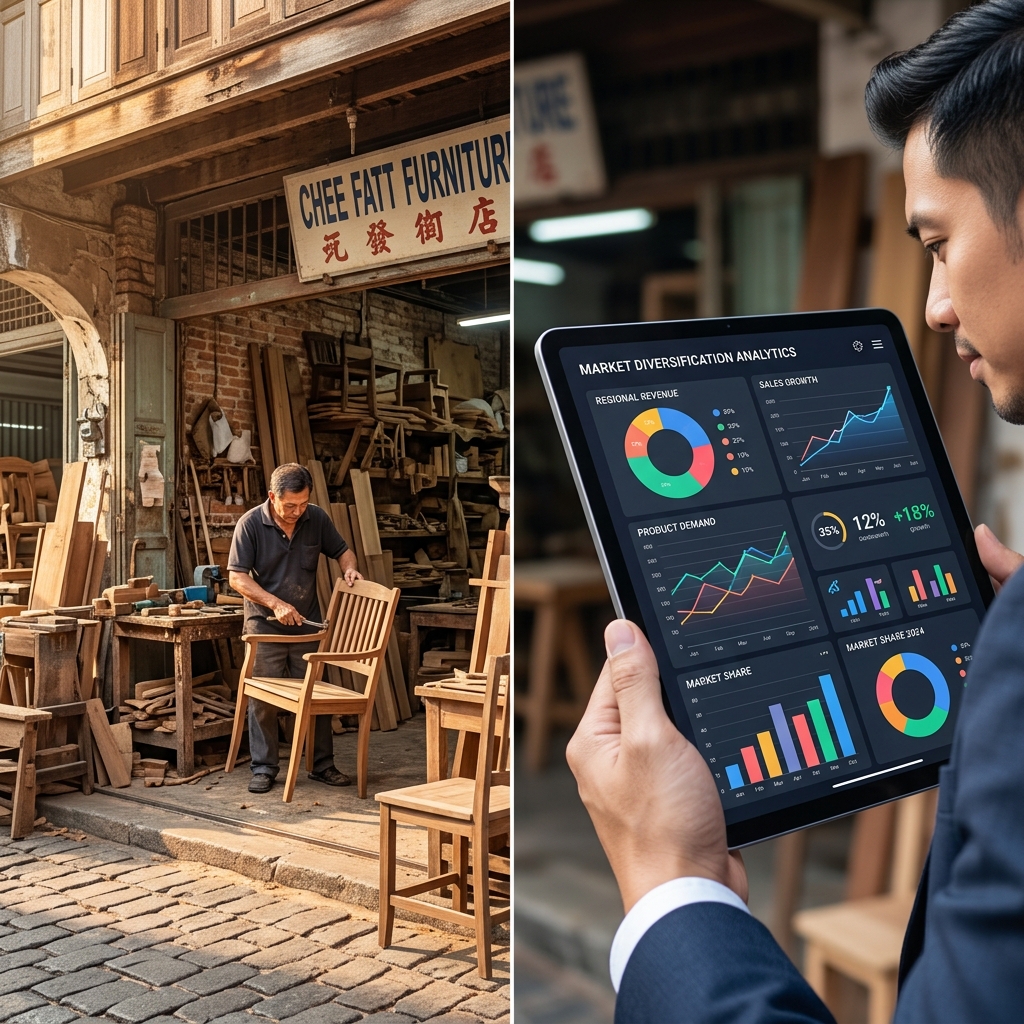
Featured image concept: A split-screen image showing a Malaysian SMB shopfront — perhaps a furniture workshop or small manufacturer in Penang — on the left, with a clean digital interface showing market diversification analytics on the right. Warm morning light. Realistic and grounded, not stock-photo generic.
Schema markup: NewsArticle (due to timely news hook), FAQPage (add FAQ schema for common tariff questions), BreadcrumbList