Nvidia GTC 2026: What to Expect — and What It Means for AI Infrastructure
On March 16, Jensen Huang takes the stage in San Jose for Nvidia's annual GPU Technology Conference — and he's already promised chips "the world has never seen before." GTC is not a consumer tech show. It's the event where the trajectory of AI infrastructure gets set for the next 12 to 18 months. If you're building on AI, deploying AI agents, or managing AI infrastructure decisions, what Huang announces this week has direct implications for your stack.
Here's what's expected, what it means, and why the enterprise AI market is watching this one more closely than usual.
Why GTC 2026 Matters More Than Previous Years
Every GTC since 2022 has been consequential. This one carries additional weight for three reasons.
First, Nvidia is operating under pressure it hasn't faced before. AMD, Google (TPU), Amazon (Trainium), and Microsoft (Maia) have started closing the performance gap on specific workloads, giving hyperscalers real alternatives to Nvidia silicon for the first time. A credible competitive landscape changes the calculus for enterprise buyers.
Second, the AI industry is grappling with a scaling wall problem. Adding more GPUs to existing architectures is delivering diminishing returns in model intelligence. Huang acknowledged this directly ahead of GTC: "Nothing is easy because all technologies are at their limits." GTC 2026 is expected to signal Nvidia's architectural answer to that constraint.
Third, the semiconductor tariff environment has shifted the stakes for enterprise AI infrastructure investment. Organizations making hardware commitments now are making them in a more complex cost environment than two years ago.
What Nvidia Is Expected to Announce
The Vera Rubin Architecture — Nvidia's Next-Generation AI Platform
The most anticipated announcement is a formal unveiling of the Vera Rubin GPU architecture. Huang confirmed during a February dinner meeting with SK Hynix engineers in Santa Clara that the chips announced at GTC relate to Vera Rubin, which is designed to deliver roughly 5x the AI performance of its predecessor, Blackwell. Rubin entered production in January 2026.
What makes Rubin architecturally significant is the integration of HBM4 — sixth-generation high-bandwidth memory developed in partnership with SK Hynix. HBM4 directly addresses the memory bandwidth bottleneck that limits current GPU performance on large model inference workloads. For organizations running complex AI agent workflows, where multiple model calls happen in sequence and context windows are large, bandwidth is often the binding constraint.
Rubin is expected to be positioned primarily for data center and hyperscale AI deployments — not consumer graphics cards. Enterprise buyers evaluating GPU infrastructure for the next cycle should pay close attention to the Rubin roadmap details.
The "World-Surprising" Chip
Huang's specific language — a chip that will "surprise the world" — suggests something beyond a roadmap update for Rubin. Speculation has centered on a few candidates.
AI SSDs — Nvidia has been in active partnership with SK Hynix and Kioxia on storage hardware targeting 100 million IOPS of performance. Current AI workloads are increasingly constrained not just by compute and memory, but by storage bandwidth. An "AI SSD" optimized for the throughput demands of large model inference could represent a meaningful new product category.
Feynman architecture preview — Feynman is the platform slated to follow Rubin around 2028, with rumored innovations including silicon photonics (using light for data transfer instead of electricity) and TSMC's 1.6nm process. An early working prototype would be an unusual move for Nvidia, but it would qualify as a genuine surprise and serve as a strong signal to competitors and customers alike.
Inference-specific silicon — Nvidia has historically shipped GPUs optimized for training. As the inference market matures and organizations move from model development to model deployment at scale, a dedicated inference chip would address a real market need and compete directly with custom inference silicon from hyperscalers.
Physical AI and Robotics
GTC has an established track record of significant announcements outside the core GPU product line. Nvidia's DRIVE platform is central to autonomous vehicle development — the company recently partnered with Alpamayo on AI-driven simulation using digital twin technology. The GTC keynote is likely to include updates on physical AI: the application of AI to robotics, autonomous systems, and the physical world.
For enterprise AI strategists, physical AI represents the next frontier of agentic AI deployment — agents that don't just operate in software environments but control physical systems in manufacturing, logistics, and infrastructure.
What This Means for Enterprise AI Infrastructure Decisions
Whether or not the "surprise" chip materializes as expected, GTC 2026 will shape enterprise AI infrastructure planning in concrete ways.
If Rubin Ships on Schedule
Organizations currently evaluating GPU clusters for 2026–2027 deployment should wait for Rubin pricing and availability details before committing to Blackwell-era hardware. The 5x performance improvement claim is significant enough that a short delay for next-generation silicon would likely pay off in total cost of ownership.
For smaller organizations that don't operate their own GPU infrastructure, the more important signal is what Rubin availability means for cloud provider pricing. As hyperscalers refresh their GPU fleets with Rubin hardware, older-generation inference compute typically becomes cheaper — which is where most enterprise workloads actually run.
The Scaling Wall Has Infrastructure Implications
If Nvidia's answer to diminishing GPU scaling returns involves architectural changes (like silicon photonics or memory-compute integration) rather than just more transistors, it signals that the AI infrastructure stack is entering a period of genuine architectural change. Organizations that have built their AI infrastructure assumptions around extrapolating current GPU performance curves should pay close attention to what Huang's keynote says about the path forward.
Competitive Dynamics Are Shifting
AMD's growing data center GPU presence, combined with maturing custom silicon from Google, Amazon, and Microsoft, means the infrastructure choices enterprise AI teams make are no longer purely about Nvidia. GTC 2026 will effectively be Nvidia's statement of why the competitive calculus still favors their stack. The quality and credibility of that argument matters.
What to Watch on March 16
Jensen Huang's keynote begins at 2:00 PM ET on March 16. Beyond the product announcements, three things are worth watching specifically for enterprise AI signal.
The software ecosystem update — Nvidia's competitive moat isn't just hardware. CUDA, NIM microservices, and the broader developer ecosystem create switching costs that are difficult for AMD and others to overcome. Any announcements around software or platform expansion matter as much as chip specs.
The inference roadmap — The market has shifted from training-focused to inference-focused deployment. How Nvidia addresses inference efficiency, cost per token, and latency at scale will shape the economics of enterprise AI for the next product cycle.
The physical AI and robotics segment — This is where Nvidia's long-term growth thesis lives. How aggressively they position for physical AI deployment will tell you something about where the company sees the next wave of AI infrastructure demand coming from.
The Bottom Line
GTC 2026 is more than a product launch event. It's Nvidia's answer to competitive pressure, architectural limits, and a market that is shifting from raw training compute to inference efficiency and physical deployment. Whatever Huang unveils on March 16 will set the terms of the enterprise AI infrastructure conversation for the next 18 months.
For teams making hardware and cloud provider decisions in 2026, the GTC announcements are worth watching in real time — then factoring directly into your infrastructure roadmap before you commit.
Internal linking opportunities: AI Agent Infrastructure · Semiconductor Tariffs and AI · Agentic AI · Enterprise AI Agents
Schema recommendation: Article schema + FAQ schema for "What is Nvidia GTC?", "What is Vera Rubin?", "How does GTC affect enterprise AI?"
Update note: Refresh this article with confirmed announcements after March 16 keynote. Adds significant long-tail search value as a pre/post coverage piece.
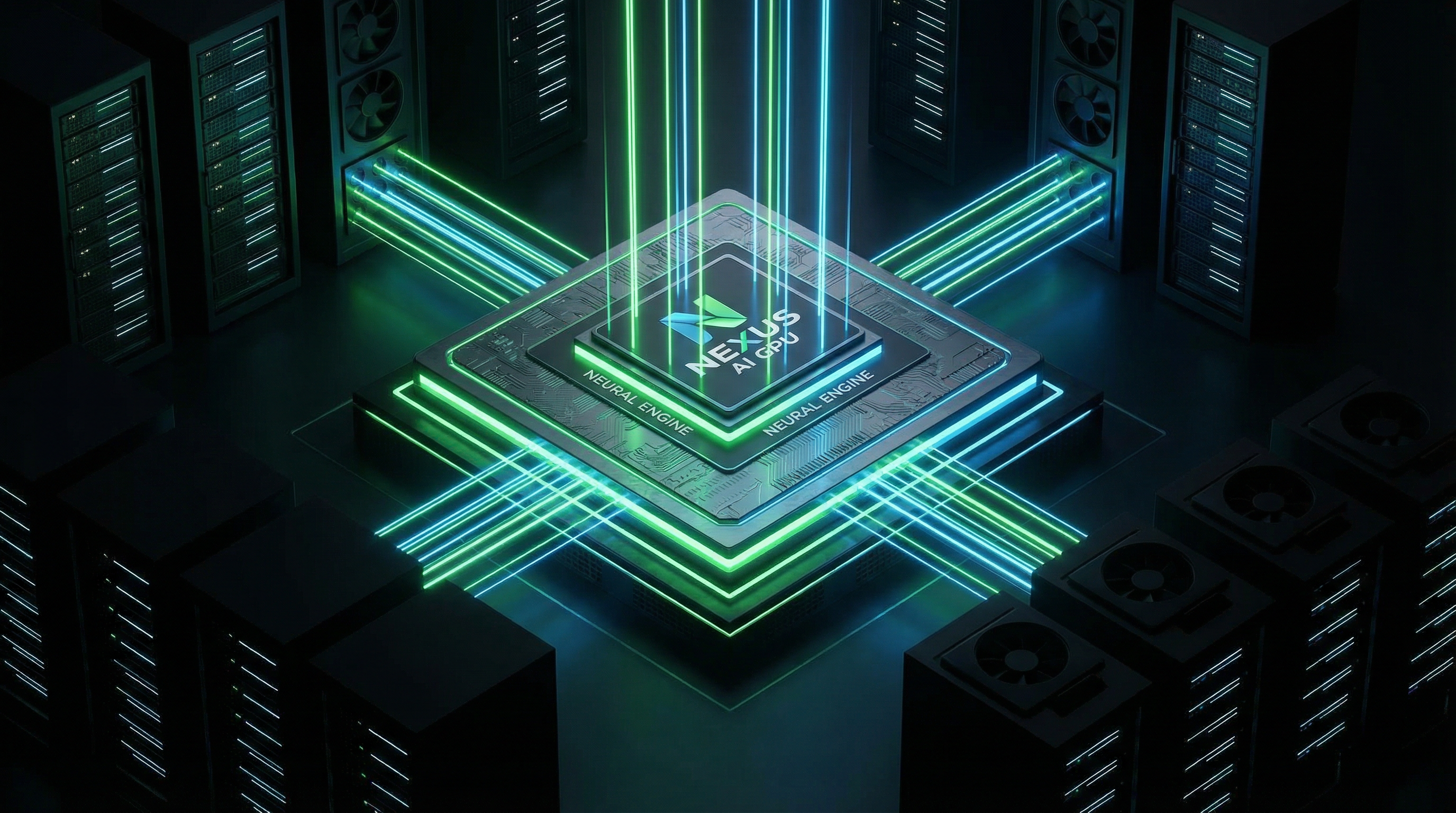
Suggested featured image concept: Dark background with a stylized GPU chip at center emitting light beams, surrounded by data center rack silhouettes. Top stat callout: "5x Blackwell performance." Bottom label: "March 16, 2026 — GTC San Jose."